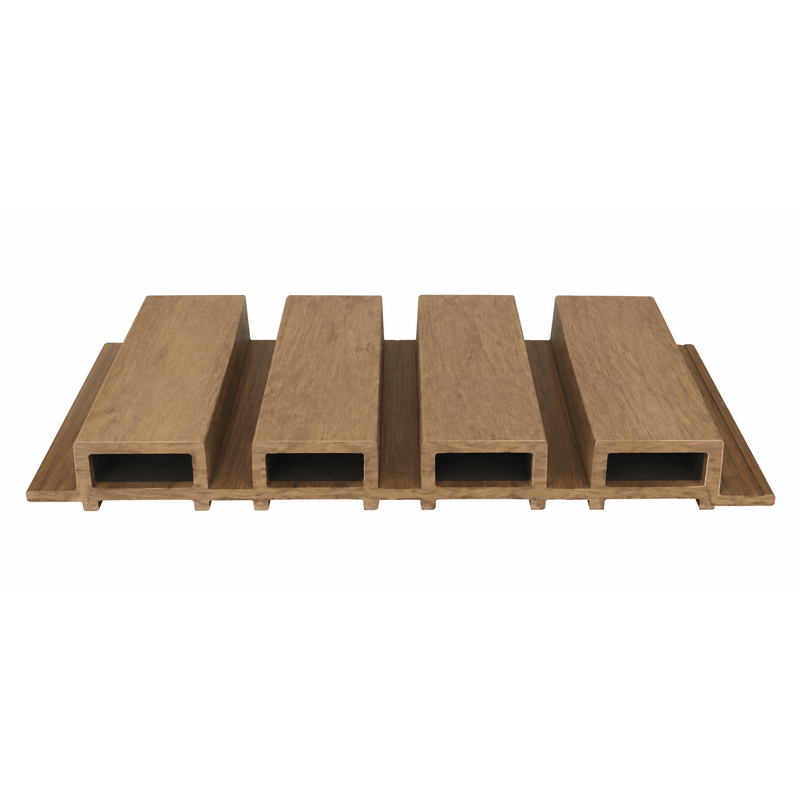
Indoor vs. Outdoor Fluted Panels: What’s the Real Difference?
Fluted wall panels have taken modern interior and exterior design by storm. With their sleek, three-dimensional linear grooves, they add texture, architectural depth, and a luxurious touch to any space.
However, a common misconception is that all fluted panels are built the same way. Walking into a hardware store or browsing online, you will find panels labeled for indoor use and others designated for outdoor use.
Using an indoor panel outside or vice versa can lead to warping, fading, mold, or structural failure. Understanding the core differences between the two will ensure your design project stays beautiful and durable for years.
1. Material Composition & Density
The primary difference lies in what the panels are made of and how dense they are engineered to be.
Indoor Fluted Panels: These are typically manufactured using lightweight PVC, bamboo fiber composites, or standard Wood-Plastic Composites (WPC) with a higher proportion of organic wood fibers. Because they don’t face harsh environmental stress, the material is formulated for smooth, refined interior finishes.
Outdoor Fluted Panels: These are heavy-duty Wood-Plastic Composites (WPC) engineered with a significantly higher ratio of high-grade polymers (plastics) combined with treated wood fibers, often encased in a protective polymer cap layer. This makes the panel denser, rigid, and completely sealed against moisture absorption.
2. UV Protection & Weather Resistance
Exposure to the elements is the ultimate test that separates indoor and outdoor materials.
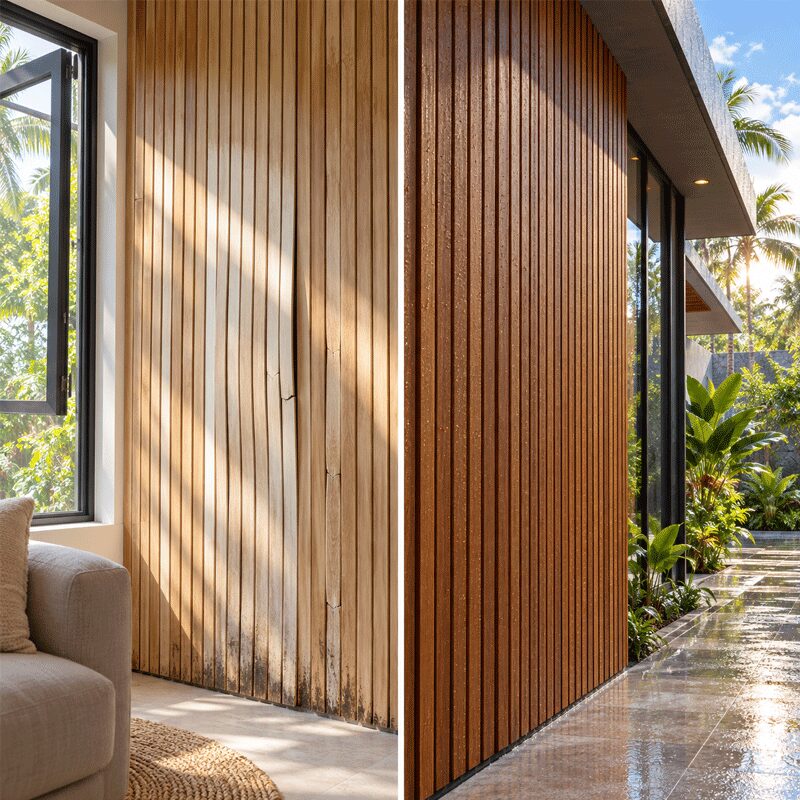
Indoor Fluted Panels: Indoor panels lack UV stabilizers. If exposed to direct sunlight through a large window for prolonged periods, or installed on an exterior wall, they will quickly fade, discolor, become brittle, and warp. They are also susceptible to moisture damage if placed in persistently wet outdoor environments.
Outdoor Fluted Panels: Exterior panels are packed with advanced UV inhibitors and weatherproof coatings. They are specifically engineered to withstand intense tropical sunlight, heavy rain, freezing temperatures, and humidity without fading, cracking, splitting, or rotting.
3. Weight, Thickness, and Structure
The physical build of the panels dictates how and where they can be mounted.
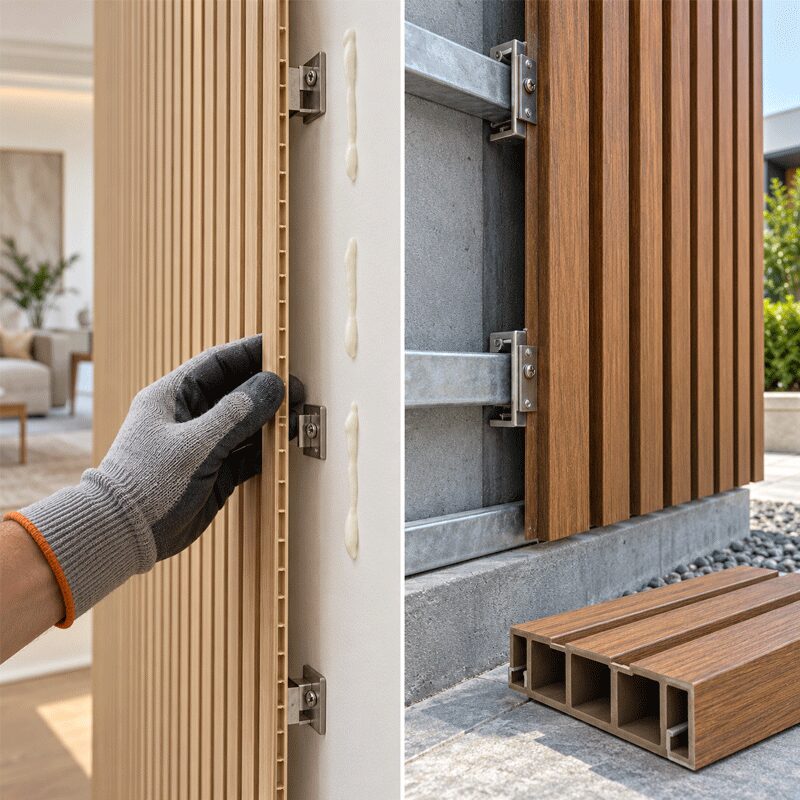
Indoor Fluted Panels: These are generally thinner (ranging from 9mm to 17mm) and lightweight. Their lighter structure makes them easy to handle, cut, and mount onto interior drywall or ceilings using standard construction adhesive or light clips.
Outdoor Fluted Panels: Exterior panels are noticeably thicker, heavier, and bulkier. They are built to endure exterior forces like strong winds, thermal expansion/contraction, and accidental impacts. They require robust mechanical fasteners, framing battens, and deliberate expansion gaps during installation.
4. Pest and Moisture Resistance
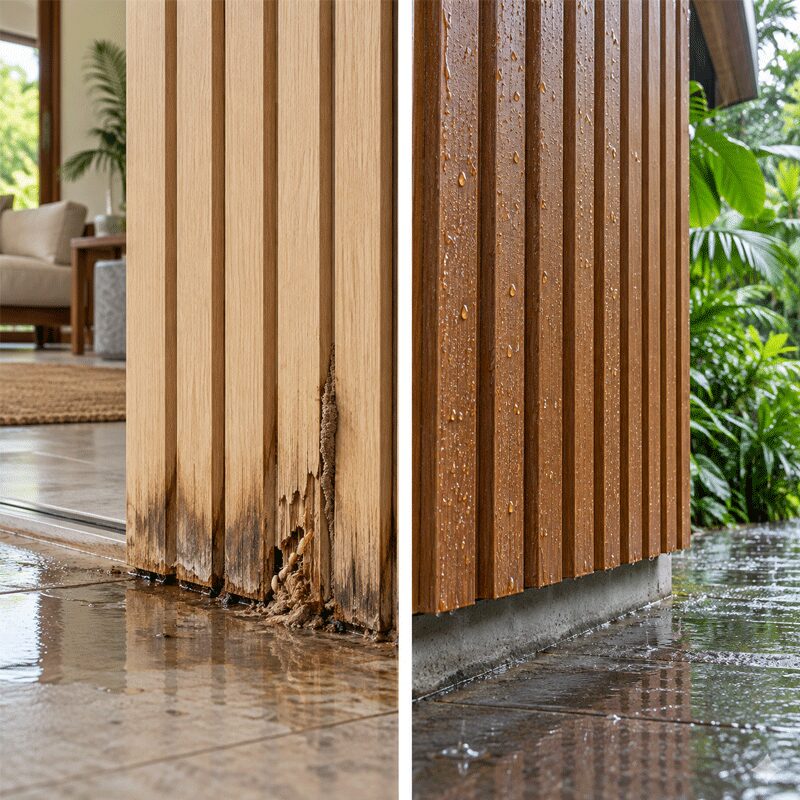
Indoor Fluted Panels: While many modern interior WPC and PVC panels resist everyday humidity (making them great for bathrooms or kitchens), they are not rated for standing water or ground contact. In unsealed tropical environments, standard interior wood-composite panels can also become vulnerable to termites.
Outdoor Fluted Panels: Exterior panels are 100% waterproof and naturally immune to termites, beetles, and wood-boring pests. Water rolls right off their sealed surface, preventing mold and rot even during severe rainy seasons.
Quick Comparison Summary
| Feature | Indoor Fluted Panels | Outdoor Fluted Panels |
| Primary Material | PVC, bamboo fiber, lightweight WPC | High-polymer WPC with UV cap layer |
| UV Protection | Minimal or none (will fade in sunlight) | Advanced UV-resistant inhibitors |
| Moisture Resistance | Handles indoor humidity; not waterproof outdoors | Fully waterproof and weather-sealed |
| Weight & Thickness | Lightweight and thin (approx. 9mm–17mm) | Heavy, dense, and thicker for wind/impact |
| Common Applications | TV feature walls, bedroom accents, office ceilings | Building facades, balconies, patio accent walls, outdoor soffits |
How to Choose the Right Panel for Your Project
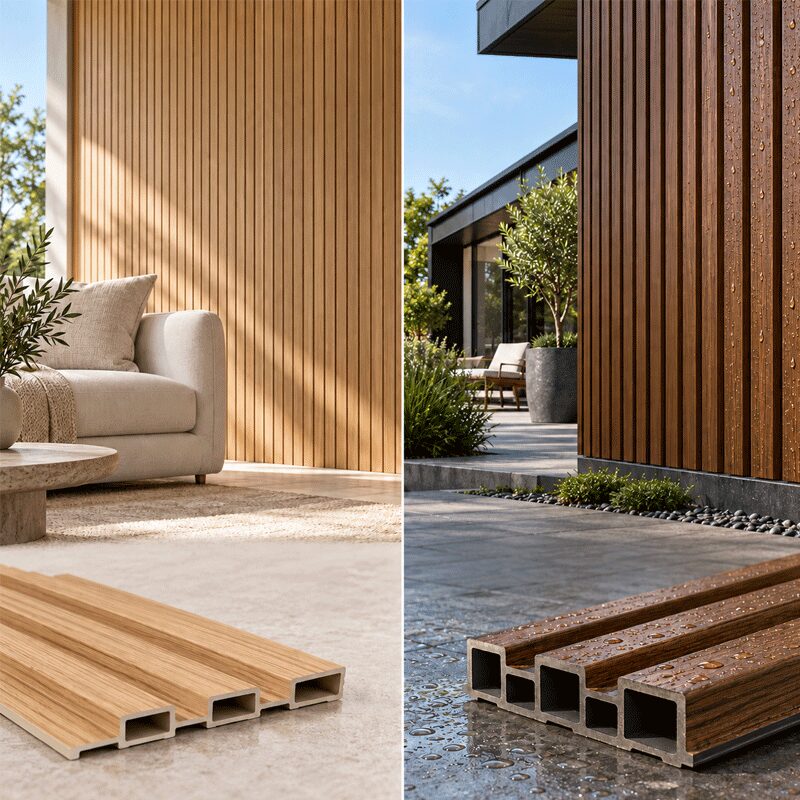
Choose Indoor Panels if: You are styling a living room accent wall, updating a bedroom headboard, framing a TV console, or adding texture to an office ceiling. They offer gorgeous aesthetics, easy DIY handling, and a cost-effective way to elevate indoor spaces.
Choose Outdoor Panels if: You are upgrading an exterior building facade, creating a feature wall on an open balcony, designing a backyard patio backdrop, or installing panels in an area exposed to direct rain, sunlight, and fluctuating outdoor temperatures.
Matching the panel grade to your environment is the single most important step in ensuring your architectural investment stands the test of time.
Available at the following branches:
- Worldwide Tile Depot – Cor. V. Mapa Tionko Ave., Davao City
- Worldwide Tile Depot – A.S. Fortuna Street, Mandaue City
- Worldwide Home Depot – N. Bacalso Avenue, Cebu City
- Worldwide Home Depot – Tangasan Valladolid Carcar, Cebu City
Click here to shop now and follow us on Facebook for the latest news, updates, and special offers!